The Berger Collection comprises 65 British artworks in total gifted to the museum in 2018 by the BCET, owner of the collection since 1999. The paintings are part of the collection formed in the mid-1990s by the late William M. B. Berger and his wife Bernadette Joan Johnson Berger and now owned by the DAM. The BCET gift is the largest gift of European old masters to the DAM since the museum received the Kress Collection in the 1950s. It enriches the museum's painting and sculpture collection, currently strong in artwork from the early Italian Renaissance and 19th century France.
Featured works in the Berger Collection gift include a 14th century Crucifixion, a rare survivor of the destruction of religious paintings during the reign of Henry VIII; portraits by 17th century masters Sir Anthony van Dyck and Sir Peter Lely; a Neoclassical work referencing Roman history by Royal Academy founder Angelica Kauffman; landscapes by the British School’s preeminent artists, among them Thomas Gainsborough and John Constable; and superb paintings by Sir Thomas Lawrence, George Stubbs, and the Americans Benjamin West and John Singer Sargent.
About the Founders
William Merriam Bart Berger (1925-1999) was born in Denver, a fourth-generation Coloradan. Following family tradition, he built a career in finance, for which he was nationally recognized. Bernadette Joan Johnson Berger (1940-2015), also a Denver native, grew up in western Colorado and owned farms in Kansas She raised three daughters and worked as a securities trader and stockbroker.
Long-time collectors and art patrons, they chose to collect British art because of a shared love of British culture nurtured through ancestral and professional connections. The Bergers were passionate about art's potential to educate and saw their collection as a resource for adults and children alike. As they observed, "We have always believed that art, as well as music, poetry, and literature, refreshes and enriches our lives." By making their collection accessible, the Bergers hoped to foster a deeper understanding of art and history and to provide viewers with new insights into the world and themselves.
The Berger Collection Educational Trust (BCET)
The Berger Collection Educational Trust (BCET) was created in 1999 by the late William M. B. Berger, founder with his wife Bernadette Joan Johnson Berger of the Berger Collection of British art. The Trust was established to sponsor educational activities related to the Berger Collection and to the people, culture, and history the artworks portray. Since 1996 the collection has been administered by the Denver Art Museum, where a selection of works has been on display on a rotating basis.
Artworks from the collection have been on view in institutions across America and abroad, including the J. Paul Getty Museum, Los Angeles, California; the Yale Center for British Art, New Haven, Connecticut; the British Library, National Portrait Gallery, and Tate Britain, London; and the Museo Thyssen-Bornemisza, Madrid.
Current Trustees are Ms. Katherine M. B. Berger, Mr. Mark Bessire, Mrs. Cynthia L. Hayes, Mr. David S. Hayes, and Mrs. Heather Nielsen.
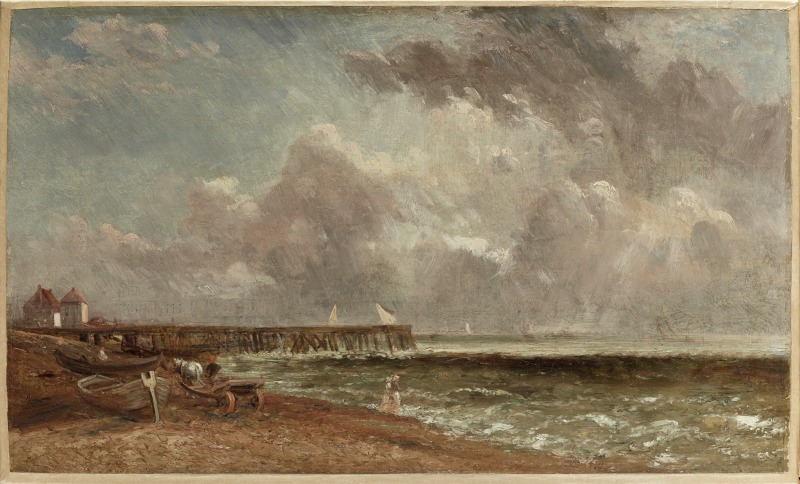
John Constable, Yarmouth Pier, about 1820–22. Oil paint on paper mounted on canvas. Gift of the Berger Collection Educational Trust, 2018.25.
The Berger Collection On View
A selection of the paintings gifted to the museum by the Berger Collection Educational Trust (BCET) are on view in The 19th Century in European and American Art. More than 60 of these works were also showcased in Treasures of British Art: The Berger Collection in 2019 and 2020.
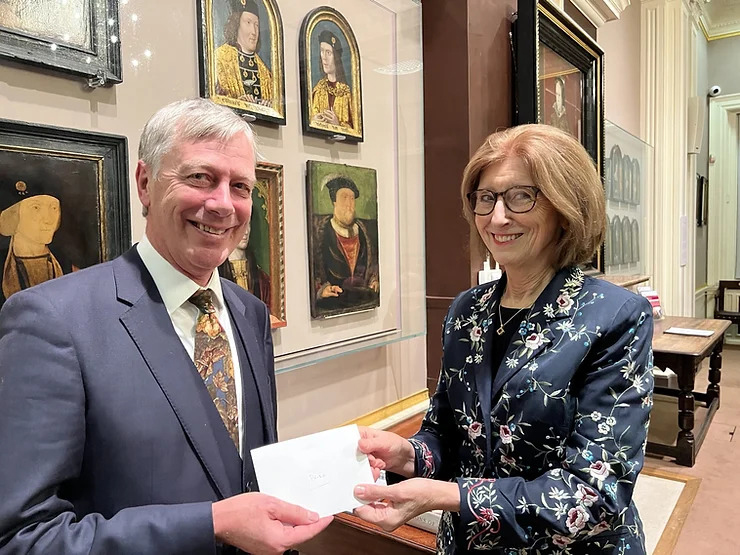
Professor Deborah Swallow CBE presents the 2023 Berger Prize to author Timothy Clayton (credit: Robin Simon)
The Berger Prize
The Berger Prize celebrates brilliant writing and scholarship about the arts and architecture of the United Kingdom. The Walpole Society, which promotes the study of Britain's art history, will deliver the Berger Prize from 2024, working alongside the BCET and Denver Art Museum, home of the Berger Collection of British art. The Walpole Society was appointed following the retirement of Robin Simon, co-founder and organizer of the prize since 2001.
For more information on the Berger Prize and the criteria for eligibility, please visit The Walpole Society's website.
The Berger Prize Past Winners
William MB Berger Prize for British Art History Winners and Presenters:
2023: Timothy Clayton, James Gillray: A Revolution in Satire. Paul Mellon Centre for Studies in British Art. Presented by Professor Deborah Swallow CBE.
2022: Adriano Aymonino, Enlightened Eclecticism: The Grand Design of the 1rst Duke and Duchess of Northumberland. Yale University Press. Presented by Sir Charles Saumarez Smith. Watch video.
2021: Matthew Craske, Joseph Wright of Derby: Painter of Darkness. Yale University Press for the Paul Mellon Centre for Studies in British Art. Presented by Katherine MB Berger. Watch video.
2020: Hugh Belsey, Thomas Gainsborough: The Portraits, Fancy Pictures and Copies after Old Masters. Presented by Professor Robin Simon.
2019: Nicholas Savage, Burlington House: Home of the Royal Academy of Arts. Royal Academy of Arts. Presented by Rachel Campbell Johnston.
2018: David Hansen, Dempsey’s People: A Folio of British Street Portraits 1824-1844. National Portrait Gallery of Australia, Canberra. Presented by Dr. Bendor Grosvenor.
2017: Sacha Llewellyn, Winifred Knights 1899–1947. Lund Humphries in association with Dulwich Picture Gallery.
2016: Giles Waterfield, The People’s Galleries. Art Museums and Exhibitions in Britain 1800–1914. Yale University Press for the Paul Mellon Centre Centre for Studies in British Art. Presented by Professor Frances Spalding.
2015: William L Pressly, James Barry’s Murals at the Royal Society of Arts: Envisioning a New Public Art. Cork University Press. Presented by Loyd Grossman.
2014: Alex Bremner, Imperial Gothic: Religious Architecture and High Anglican Culture in the British Empire 1840–1870. Yale University Press. Presented by Professor Gavin Stamp.
2013: Emily Howe, Henrietta McBurney, David Park, Stephen Rickerby, and Lisa Shekede, Wall Paintings of Eton. Scala. Presented by Professor Mark Hallett.
2012: Terry Friedman, The Eighteenth Century Church in Britain. Yale University Press for the Paul Mellon Centre. Presented by Sir Timothy Clifford.
2011: Charlotte Gere and Judy Rudoe, Jewellery in the Age of Queen Victoria: A Mirror to the World. British Museum Press. Presented by A. N. Wilson.
2010: Diana Donald and Jane Munro, eds., Endless Forms: Charles Darwin, Natural Science and the Visual Arts. Yale Center for British Art/ Fitzwilliam Museum Cambridge in association with Yale University Press. Presented by The Hon. Lady Roberts, Royal Librarian.
2008: Thomas P. Campbell, Henry VIII and the Art of Majesty. Tapestries at the Tudor Court. Yale University Press for the Paul Mellon Centre for Studies in British Art. Presented by Robin Simon.
2007: John Harris, OBE, Moving Rooms: The Trade in Architectural Salvages. Yale University Press for the Paul Mellon Centre. Presented by Tim Knox.
2006: Judith Bronkhurst, William Holman Hunt: A Catalogue Raisonné. Yale University Press for the Paul Mellon Centre. Presented by Desmond Shawe-Taylor.
2005: Paula Henderson, The Tudor House and Garden. Yale University Press for the Paul Mellon Centre for Studies in British Art. Presented by Michael Palin.
2004: Derek Keene, Arthur Burns, and Andrew Saint, St Paul’s: The Cathedral Church of London 604-2004. Yale University Press. Presented by Professor Brian Allen.
2003: Brian Andrews, Creating a Gothic Paradise: Pugin at the Antipodes (exhibition catalogue). Presented by Sir Andrew Lloyd-Webber.
2002: David H Solkin, Art on The Line. The Royal Academy Exhibitions at Somerset House 1780 –1836 (exhibition). Courtauld Institute/Yale University Press. Presented by Sir Roy Strong.
Stories Behind the Art
Dive deeper into the artworks in the Berger Collection by reading articles written by curators and museum staff.


Collection Highlights

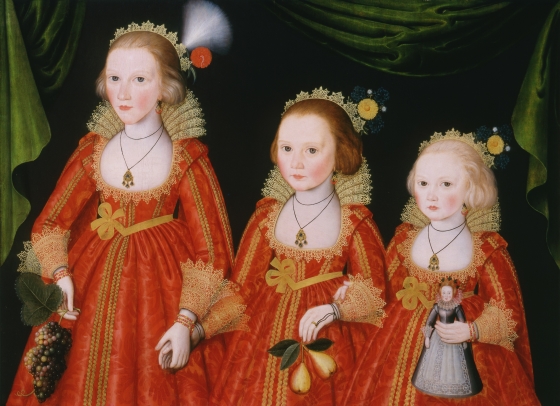

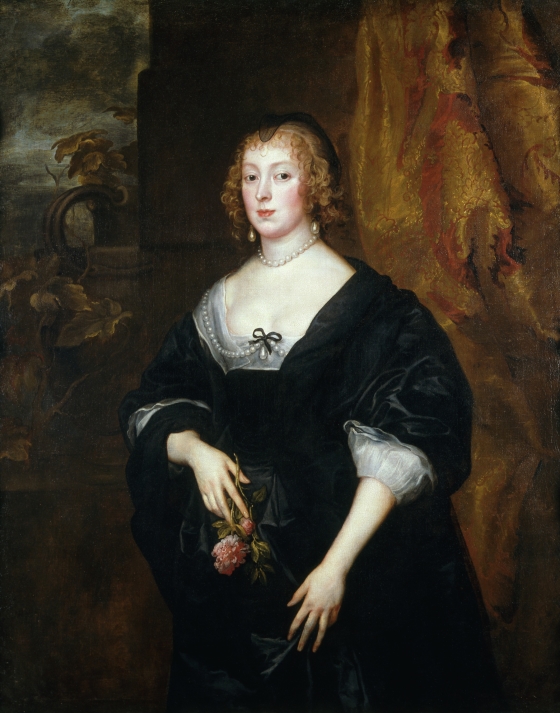
Browse the Collection
Explore more of the works from the Berger Collection Educational Trust in the Denver Art Museum's online collection.